London Fortean Society:
The Haunted Landscape: Magic, Fairies and Old Gods
21st November 2026 · 10:00am - 5:00pm
Doors open: 9:30am
In person | Virtual event
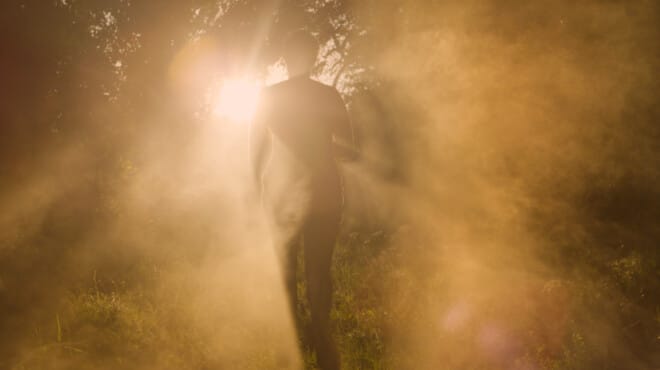
This year, The Haunted Landscape, our annual folklore all-dayer, delves into the realms of magic fairies and old gods. We will entertain the Great God Pan with Professor Ronald Hutton and Sara Hannant, mees fairies new and old with Francis Young and Jo Hickey-Hall, discover witch trials with Marion Gibson and walk Britain’s haunted lands with Jeremy Harte and Fiona Robertson.
The Return of the Horned God
Ronald Hutton
Prof Ronald Hutton examines the reason why the Horned God has become the main form of Pagan male deity in the modern West, representing the regenerative powers of nature. He traces the sudden and dramatic emergence of the ancient Greek god of the wild, Pan, as the favourite male divinity of the Victorians and the animating spirit of the English landscape. Hutton then explores the way in which Pan became for different writers a comforting and protective divinity, a dangerous and disturbing one, and one of personal liberation (especially sexual). Finally, he shows how a particular deity became an enduring modern archetype.
Ronald Hutton is Professor of History at the University of Bristol. He is a leading authority on history of the British Isles in the sixteenth and seventeenth centuries, on ancient and medieval paganism and magic, and on the global context of witchcraft beliefs.
Panic: Visions of the Horned Gods
Sara Hannant
In this talk, Sara Hannant will describe highlights from her magical journey which resulted in her book, Panic: Visions of the Horned God in the English Country Garden. Wild and exciting, the Greek god Pan induces both fear and awe; at times, he is dangerous, stirring panic and creating pandemonium. Often depicted as a satyr, with the lower body and legs of a goat and a human torso and horned head, this half-man, half-goat represents a fusion of human and non-human. Her dreamlike images investigate statues of the Horned God as a personification of nature in our climate emergency, rousing us to recognise our place within the living world.
Sara Hannant is an award-winning artist and photographer. Her practice is inspired by witchcraft, magic, and folklore. Sara has exhibited internationally, and her books include Panic: Visions of the Horned God in the English Country Garden, Of Shadows: One Hundred Objects from the Museum of Witchcraft and Magic and Mummers, Maypoles and Milkmaids: A Journey Through the English Ritual Year, which was also a Horniman Museum touring exhibition, bringing contemporary British folklore and Paganism to a wide and diverse audience.
A History of European Fairy Traditions
Francis Young
Fairies are persistently associated with certain regions of Europe and not others, while the word we tend to use for these beings in English derives from French and was borrowed into English. Yet there is a great deal more to Europe’s fairies than the well-known fairies of Britain, the aos síof Ireland and the elves of Iceland and trolls of Scandinavia. In this talk, Francis Young explores the possible origins of some of the less well-known fairies of Europe, from Greece and the Balkans to the Baltic and Slavic worlds, as well as France and Iberia, to show that belief in nature spirits, godlings and social supernatural beings is common to almost all European cultures and a central feature of the Continent’s cultures.
Francis Young is a tutor at Oxford University’s Department for Continuing Education. He writes on the history of religion, belief, and folklore, and has written, edited, or translated over twenty books, including Twilight of the Godlings and Magic in Merlin’s Realm.
Witchland: A Tale of Witch Hunting and War in Seventeenth-Century Britain
Marion Gibson
If the witchfinders came to your town, who would you have believed – and what would you have done? In the 1640s, Britain was swept up in a brutal witch hunt. The economic uncertainty and religious extremism fuelled by the English Civil War created a climate of fear. Neighbours turned on each other. Women and the poor were especially vulnerable, scapegoated by the powerful looking for someone to blame. In the resulting hysteria – which would, just a few decades later, provide a handbook for the Salem trials – hundreds of innocent people were killed. Prof Marion Gibson shows that these were ordinary people with extraordinary stories, largely forgotten by history, caught up in suspicion and moral panic.
Marion Gibson is a historian of witchcraft and magic. She writes books about ancient and modern witches and witch-trials in Britain, Europe, America and Africa. Her books tell the stories of people accused of witchcraft, their fascinating worlds – both everyday and magical – and the people who feared and persecuted them. Her latest book, Witchland, a captivating story of fanaticism, inequality and the violence that surfaces during times of political, will be available on the day.
Mad, Bad or Sad? Ghost Monks and their Hidden Treasures
Jeremy Harte
The Dissolution of the Monasteries filled England with ghosts and ruins. Into the sandals of the real monks – those unexciting land managers and liturgical specialists – stepped a host of cultural imposters. Saintly, fiendish, and sometimes both at the same time, they were remembered largely for the treasures they had concealed and contracts were issued for digging up abbeys, nunneries and friaries in a frenzied search for hidden wealth. Tunnels, those dark highways to the imagination, held secrets it was better not to know. Every deep pool contained a spectacular pair of golden gates, ripped from their shrines and thrown away for safe-keeping when the King’s men came. A curse lay on modernity with its tainted legacy of estates stolen from the old religion, but the lure of gold was too strong for the ruins to be left alone.
Jeremy Harte is a folklorist and museum curator. He worked for many years as curator of Bourne Hall Museum in Ewell, Surrey and is the author of over ten books on British folklore and history. Jeremy is a researcher into folklore and archaeology, with a particular interest in sacred space and tales of encounters with the supernatural.
Stone Lands: A Journey of Darkness and Light Through Britain’s Ancient Places
Fiona Robertson
All over Britain prehistoric stones, dolmens, barrows and hill forts have survived into the modern age, places of legend, folklore and mystery that enchant the landscape. Fiona Robertson, author of Stone Lands, explores how these ancient sites can offer us a sense of grounding and solace several millennia after they were built, connecting us with nature’s ever-turning wheel and giving a deep-time perspective on our individual lives. She describes some of this country’s most evocative prehistoric places, where the link with the past feels especially strong, as well as sharing a few megalith-related tales of demons, ghosts, witches, and antiquarians driven to madness by their obsession with the stones.
Fiona Robertson is a writer, editor and author of Stone Lands – a Telegraph and Waterstones Best Book of 2025. She is passionate about history, archaeology and folklore, and in a former life as a publisher enjoyed building a list exploring these topics.
Modern Fairy Sightings: Personal Encounters in Extraordinary Times
Jo Hickey-Hall
The modern Western consensus is that the existence of fairies is a ridiculous archaic notion, but a surprising amount of credible modern reports of encounters are causing an increasing amount of us to reconsider. The Modern Fairy Sightings Project provides a space for us to listen to people’s eye witness accounts. In this talk, Jo explores what happens when people come into contact with these beings and what it tells us about our relationship with these non-material worlds at this particular juncture in humanity’s journey.
Author and folklore researcher, Jo Hickey-Hall is the host of The Modern Fairy Sightings Podcast which collects and preserves contemporary experiences. She created the Modern Fairy Sightings Project in 2016 to challenge the cultural taboo surrounding disclosure. She has appeared on Sky History’s Britain’s X-Files, assistant-produced forthcoming documentary film, Fae Folk: A Search for Connection and her first book, Modern Fairy Sightings: Personal Encounters in Extraordinary Times will release in November 2026.
The Piper Beneath My Ribs
Simon Costin
Age Recommendation:
16+
Price:
*A £2 venue levy is applied to each ticket purchased. This levy helps to support us in covering the costs of keeping our grade II listed building running and our doors open.*
In advance: • Supporter £30 • Standard £23 • Living Support £15 • Student £18 (+ £2 venue levy)
On the Door: • Supporter £31 • Standard £24 • Living Support £16 • Student £19 (+ £2 venue levy)
Online: • Standard £12 (+ £2 venue levy)
Access Information:
This event is in the Main Hall, which is located on the ground floor. The balcony is accessible only by stairs. The talk will also be livestreamed.
All the ground-floor rooms are fully accessible by wheelchair. Main Hall (street access, step-free), Brockway Room (street access, step-free), Russell Room (street access, shallow ramp), Cafe (street access, step-free). There is also an accessible toilet on the ground floor opposite the Brockway Room.
Further Info
This event will be held with an in-person audience at Conway Hall and online via livestream. Everyone wishing to join this event must register for a ticket in advance.
If you have any accessibility enquiries, please contact us at info@conwayhall.org.uk / 07442 405 055.